
Boston BERDO 2.0: What the City’s Emissions Law Means for Building Owners
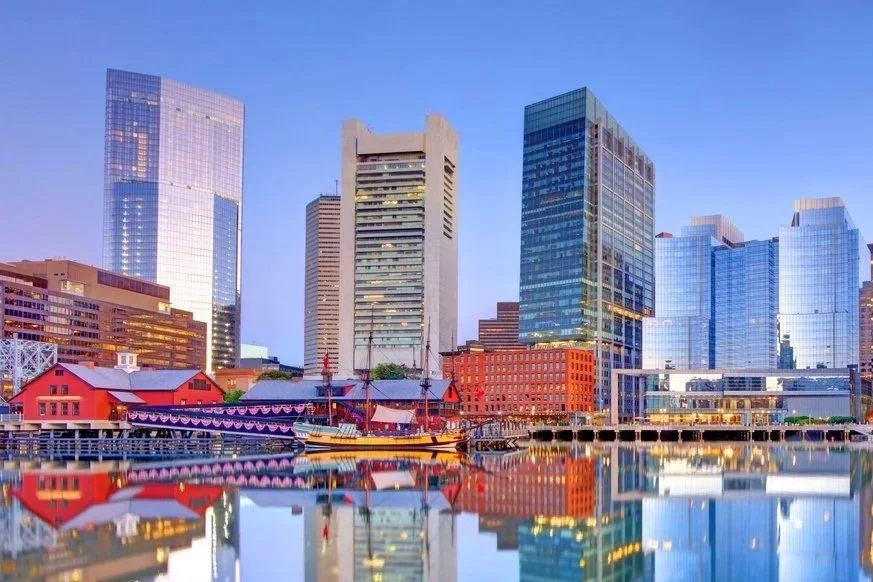
Boston’s Building Emissions Reduction and Disclosure Ordinance (BERDO) is redefining compliance for buildings across the city, the single largest source of emissions in Boston.
BERDO 2.0 moves beyond benchmarking with annual reporting and establishes binding greenhouse gas emissions limits that tighten over time – building toward a net‑zero requirement by 2050.
For building owners, property managers, and asset teams, BERDO is less about paperwork and more about long‑term emissions reduction planning.
A Quick Look at BERDO
Minimum size threshold: 20,000 sq ft
Annual reporting deadline: May 15th (2026 deadline delayed to August 15th)
Buildings covered: 35,000+
Net‑zero target: 2050
Which Buildings Must Comply?
BERDO applies to existing buildings within Boston city limits that meet size and occupancy thresholds.
Covered building categories include:
Commercial & Office – offices, retail, hotels, mixed‑use properties
Multifamily Residential – apartments, condos, and co‑ops with 15+ units
Institutional & Educational – hospitals, universities, schools, nonprofits
Industrial & Warehouse – manufacturing, logistics, and storage facilities
Municipal & Government – all city‑owned buildings
Single and two family homes, buildings under the size threshold, and approved hardship cases are generally exempt from BERDO.
Bottom line: Most non‑residential buildings and large residential properties (15+ units) at or above 20,000 sq ft are subject to BERDO reporting and emissions limits.
See if your building is covered by checking the BERDO Covered Buildings List.
How Compliance Works Under BERDO
First, building owners need to understand the emissions associated with operating their building. Looking at the previous calendar year, owners need to collect their energy consumption and benchmark it in the ENERGY STAR Portfolio Manager Tool. This energy data is then used by the BERDO Emissions Calculator to evaluate the building’s performance relative to its emissions target.
Boston gives building owners three pathways to compliance, depending on existing performance, feasibility of upgrades, and other constraints at building.
Option 1: Reduce Emissions Directly (Preferred)
The primary compliance path focuses on reducing emissions through:
ENERGY STAR benchmarking (including 3rd Party Verification)
Energy audits and performance assessments
Efficiency upgrades and electrification
On-site renewable generation and storage
This approach offers the lowest long‑term risk by progressively reducing emissions as the limits become more stringent.
Option 2: Renewable Energy & Carbon Offsets (Conditional)
Buildings that cannot fully meet limits through direct reductions may supplement with:
Massachusetts Class I Renewable Energy Credits (RECs)
BERDO‑approved carbon offsets
This option is intended as a temporary bridge, as certain offset categories will phase out over time.
Option 3: Hardship or Alternative Compliance
Owners facing financial hardship, technical infeasibility, or preservation constraints may apply for alternative compliance through the city’s review process.
Approval is granted case by case and requires detailed supporting documentation.
Emissions Limits Are Getting Tighter
Emissions intensity limits (kgCO2e/ft2/yr) vary by building type and decline over multiple compliance periods. For example:
Office buildings: 5.3 (2025) → 3.20 (2030) → Net‑zero (2050)
Multifamily: 4.1 (2025) → 2.40 (2030) → Net‑zero (2050)
For a list of emissions limits for all building types, see BERDO details here
Each compliance period raises the bar for all covered buildings, and early planning will make future compliance more achievable and cost-effective.
Reporting Requirements & Key Deadlines
All covered buildings must submit an annual BERDO report covering the prior calendar year by May 15th. (The 2026 deadline was extended to August 15th).
Reports include:
Energy and fuel use data
GHG emissions calculations
Building size, use, and ownership details
Tenant energy data (if applicable)
Renewable energy or offset documentation (if used)
Reports are submitted electronically through boston.gov/berdo, with extension requests due by May 15th. Applications for financial assistance through the Equitable Emissions Investment Fund are due June 1st.
Penalties for Noncompliance
Non‑compliance carries meaningful consequences:
$1,000 for an initial failure to report
$200 per day for continued non‑reporting
$234 per excess MTCO₂e above emissions limits
Up to $50,000 for willful or fraudulent violations
Penalty revenue supports Boston’s Climate Resilience Fund, helping finance emissions reduction projects citywide.
How CodeGreen Supports BERDO Compliance
BERDO is not a one‑time obligation—it’s a long‑term emissions management framework. CodeGreen helps Boston building owners stay compliant by providing:
ENERGY STAR benchmarking and BERDO reporting
Emissions calculations and data verification
Energy audits and emissions reduction strategies
Renewable energy, procurement, and carbon offset guidance
Multi‑year decarbonization and compliance planning
CodeGreen is an approved BERDO Third-Party Verification Provider
By translating policy into practical action, CodeGreen helps building owners reduce risk, control costs, and plan confidently through 2050.
Looking Ahead
The most successful BERDO strategies start early. Let’s get started together!
Need help navigating Boston BERDO? CodeGreen partners with building owners to transform complex emissions requirements into clear, achievable solutions.